Saturday, 1 September 2012

Planting Season & Tuna Fruit

It is the planting season here right now, and along the dirt road to the Casa, the farmers are busy preparing the ground, plowing behind yoked bulls.  In the Cusco area it is very rare to see tractors.  The majority of farm work is done by hand.  It is encouraging to see neighbouring families working together to get the job done.


It is the tail-end of the dry/winter season (or as I tend to think- the dusty season), and it's very dry.  But, the Peruvians are quite intelligent with irrigation, re-routing water from various creeks through their plots.  Many of the intriguing pre-Spanish incan archaeological ruins are still well preserved today, showing the intricacy of irrigation systems that they created decades ago. 


November, 2011


I took this photo last year in November, and as you can see, it is much drier in August! In the following weeks, the wet/summer season will be starting.  It's hard to believe what a difference a month or two can make! 
August 29, 2012


TIPON, only half an hour outside of Cusco, is one of the amazing Incan sites featuring the intelligence of the Incan culture, pre-Spanish times, with their intricate systems of water channels and irrigation works  Photo taken last year on the South Valley Tour

August is also the month for flying kites.  It is windy, and apparently the 'thing' to do with school-kids, Sunday school classes, families and friends.
 

More interesting fruit in Peru...

 
It is a little past the peak season for tuna, but seems to be something you can still find year-round.  Not to be confused with the fish, tuna is the Spanish word for this interesting fruit that grows on a cactus plant (also known as prickly pear).  The inside looks a bit like beets, but with seeds.  Different varieties here have either an orangey-color or more beet-colored flesh.  It is not a juicy fruit, but rather somewhat like the consistency of a baked potato.  They need to be peeled properly, to avoid problems that could result from the little spines being injested.  Usually, if you buy them in the local market, the vender will peel the fruit for you.

The bulbs on the top of these cacti turn into the Tuna fruit
 
Tuna fruit

 
This cactus plant is also a famous source of a natural red-colored dye.  There is a worm called Cochinilla, that makes it's home on the paddle cactus leaves, forming white patches on the cacti.  If you rub these white forms, it will produce a red dye that the natives here use for dying wool, and have said can even be used as a natural lip color or blush.
 
Cochinilla on the Tuna Cactus  Photo taken in the Sacred Valley in late June

The red dye created by rubbing the white substance from the worms that habitate on the cacti (you can see in the pot to the left of the girl)  Photo taken on the Sacred Valley Tour last year
 

Trip Home...

Just over a year in Peru, I am gearing up for a trip home and Walter is getting excited for his first visit to Canada!  We can't wait to see & meet everyone, to enjoy autumn in Alberta and all the other things that Canada culture will offer!


Monday, 13 August 2012

Project at the Hospital

So, about a month ago, I decided to start helping out with a project at the regional Cusco hospital.  It was started by an Australian lady who is married to a Peruvian and has lived in Cusco for some years with their family.  The project encompasses looking out for the impoverished in many different ways. This hospital has had a title for years as Cusco's "hospital for the poor" which means there are endless opportunities to help the oppressed who come through the hospital doors. 


Basic nursing station
Many of the patients are from the country and have very little, including the education needed to be informed of available health care, patient rights, available options, and basic self-care while in the hospital.  Although there is an assisted health care program available to Peruvians, many of the people from the country don't know about it until they really need it, and then it's too late.  If you are hospitalised, you can't apply for SIS (Seguro Integral de Salud: comprehensive health insurance) and reap the benefits while there.  And, unfortunately, that's how most of the country people find out about SIS in the first place.

This project is big in advocating for these patients who have little and might otherwise  try to 'escape' the hospital before they have been properly treated, knowing that they won't be able to pay the bill when it comes at the end of their stay (I hear that has happened often).  When they can, they help supply basic medical supplies, such as for patients on the Burns Unit who are required to buy specific, but very expensive, antibacterial supplies.  They also help discreetly educate families who may not have a basic understanding of preventative care, such as, occasionally turning a long-term patient to prevent bedsores, or teaching on basic hygiene and supplying mini hand soaps and antibacterial gels to prevent contamination of wounds.  It must be done discreetly, because some of the staff can get their nose out of joint over us helping "too much".

Being hospitalised here, patients have to provide their own:
  • medications (any prescriptions ordered by the Doctor)
  • medical supplies (such as bandages or antibacterial sprays or creams) and 
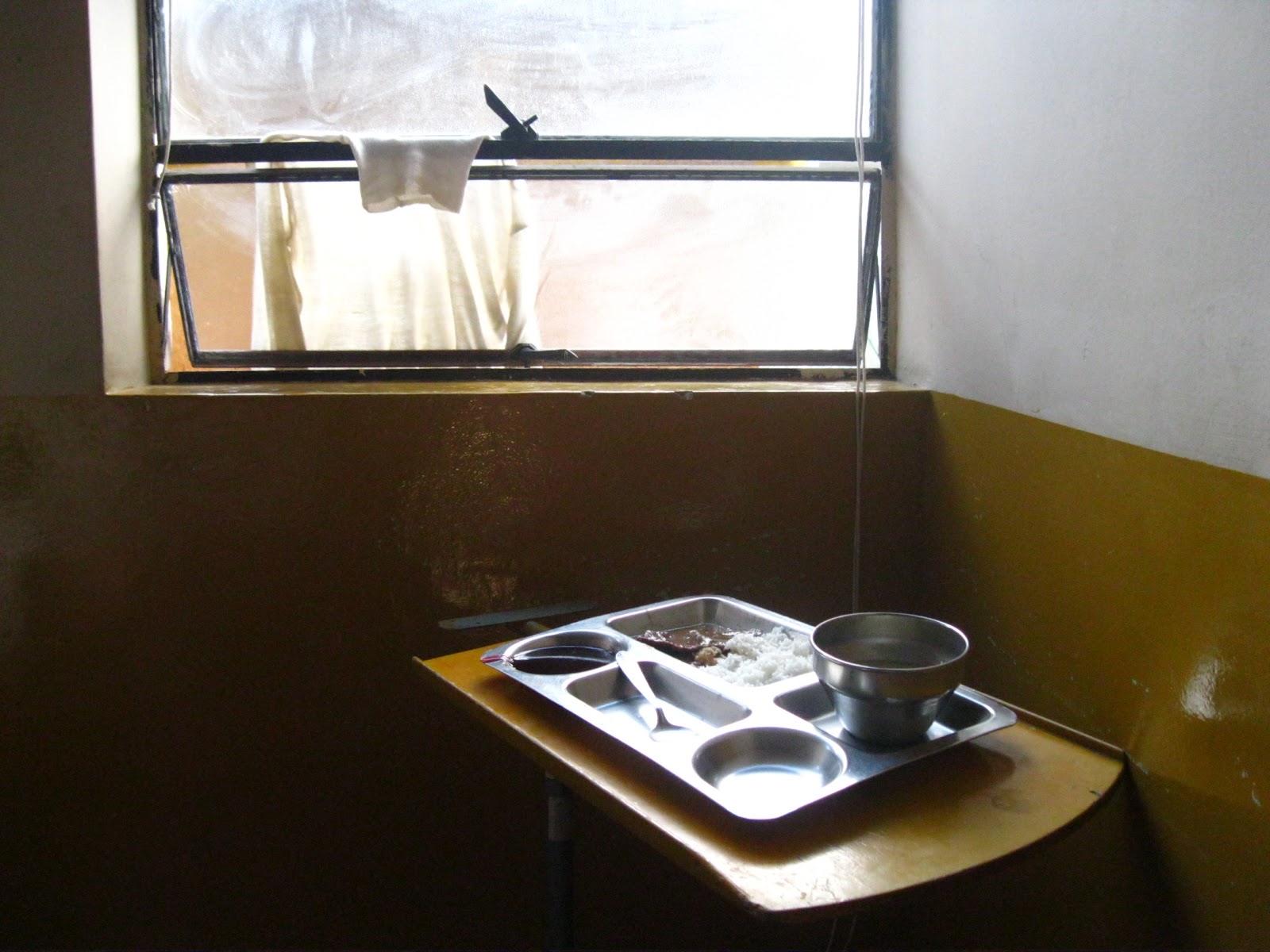
  • other basic things needed (see photos below) for the endurance of their stay. 
Nurses come in to do basic check-ups including blood pressures, weight, IV lines, etc.  But, they don't tend to help with feeding, bathing or using the bathroom.  Hopefully there's a family member available to help with these things!


Patients must supply their own: drinking cup, cutlery, comb, towel, sandals, soap, toothbrush and paste, toilet paper;  They must maintain cleanliness in their bed area, collect their garbage in their own plastic bags, and clean the bathrooms after themselves
 Patients must also supply their own shampoo, sleepwear, and thermometer
Little is available for family members, and most from the country can't afford to stay somewhere in town, so they often sleep out in the field above the hospital. Temperatures in Cusco are often close to freezing overnight. There are no bathrooms available outside, and after visiting hours, they must use the field as well for this.


When laundry needs to be done, family members will wash by hand and hang clothes outside the windows on the one side of the hospital that receives the hot sun throughout the day.


Traction set-up on the beds in the Trauma Unit

Rooms are often shared by patients of all ages (on the wards other than Pediatrics).  There are no call-switches to alert nurses.

A basic patient bed
One of the rooms on the pediatrics ward
There are no sources of entertainment (televisions or books) provided by the hospital.  This is one of the areas that I am enjoying being a part of, in bringing entertaining material to the children on the wards that they can borrow for a few hours (toys, games, puzzles, books) or keep to take home (such as crayons and coloring pages, activities, mini booklets).

A couple of weeks ago, we put on a mini-birthday party for a 2-year old on the Burns ward, complete with cake, cookies, hot chocolate (cooled down!), and watermelon.  We dressed up in clown outfits and made balloon animals (I've only learned how to do a dog and a giraffe), and later took the extra food to the children on the other wards along with balloons and mini bible-story booklets for them to keep.


Although it can be a really difficult place to step into, it's worth seeing the smiles on some of the faces of not only the children, but their grateful parents, as well.

Tuesday, 31 July 2012

One Year in Peru/ A Medical Campaign, Lares Trek, and El Arca orphanage

August 2 marks one year that I have been living in Peru!  Volunteering at the JH orphanage has been a blessing in getting to hold, cuddle, and entertain little ones, giving them some semblance of what it should be to be in a safe and loving family, even if their "family" life isn't exactly normal.

Walter and I have been married nearly two months, and although we haven't had a proper honey-moon, we have taken on a couple of small adventures, that have been good experiences for us to do together.  At the end of June, we joined a large U.S. medical campaign in Quillabamba.  It brought back my interest in the medical field, working alongside eager medical students learning from seasoned doctors.  Walter and I helped with translating; Walter was quite popular with his knowledge of Quechua!  Though I'm not sure of the number of patients seen, the lines were long each of the three days, of locals and country-folk with all sorts of ailments and concerns.


Medical Campaign, working out of the Evangelical Church of Peru in Quillabamba

Walter has been asking for a long time, when we can do one of the inka trail hikes.  We finally went on a weekend, two-day Lares Trek.  I was surprised by how the terrain changed a lot along the way, offering really beautiful views.  We camped at 4600 meters above sea level the first night.  It was cold, and there was frost on the ground in the morning.  There were lots of children along the way eager to greet us, as they have become accustomed to hikers giving little candies or treats as they walk through their remote area. Many of the children in these areas don't attend school.  They work from a young age pasturing their family sheep or llamas in the Andean hills. 
The sisters in the photo below were collecting cow dung for their family, to provide fuel for cooking later.


This little girl eagerly ran after us to our campsite, knowing she might get a treat


I just loved that the one little girl carried her pet pig with her like a doll.  I always wanted a little pet pig when I was younger!

This little boy and his dog (named Gringita), sat with us for a few minutes sharing our mid-morning snack.

A typical home seen along the Lares Trek

 Back to work related things... we have had four children leave the Casa this year, which is so exciting, but has left the Casa quiet the past couple of months with only 11 children and well staffed.  For this, I have decided to spread out my work-time in a couple of other areas as well, including an orphange called The Ark and a project with the regional Hospital of Cusco.
The Ark is a home with over 20 children and most of whom are school-age and attend a local elementary school.  They have a lot less as a Home, and it functions a lot differently than the Casa.  They make due with older, tattered clothing, don't have money for fruit and meat, toothpaste, etc. on a regular basis and all the washing is done by hand daily by a couple of staff.  (That is A LOT of physical work!) 
One day I spent about 4 hours just chopping vegetables for their lunch meal.
The children are precious, and I've a special place in my heart for one little boy named Marco who, although about 10 years old, doesn't attend school.  He doesn't see or walk normally, and suffers from other developmental delays.  He has his days when he is very talkative and eager to have your attention, and other days hardly talks, perhaps sad and withdrawn into his own world.  I don't know his story, but if you could meet him, I think he'd also warm your heart!

The Hospital project has been very eye-opening and at times a challenge in confronting the very real lack both within the hospital and in regards to most of the patients' lives.  It is definitely a topic worthy of a blog of it's own...
To come soon!

Saturday, 23 June 2012

Family & Friends in Cusco!

Well, my family and friends braved long flights, layovers, altitude sickness and the cold Andean nights.  It was great to have my parents, Ryan and Amber, Shannon and Mike and their kids, and Michelle for just over a week.  The time went tooooo fast.

They got to see some of the amazing and mysterious ruins of the Cusco area, including Machu Picchu, try some traditional foods, and check out the markets.

The family above Cusco....missing Trev & Lauren :(

Touring the Saqsaywaman Ruins above Cusco
Amber and Michelle overlooking Saqsaywaman

The Pisaq ruins in the Sacred Valley
Ryan trying to befriend some type of llama

Having lunch in a fun kid-focused Cusco restaraunt
With Paul and Calliou
Cusco Artesenial Market
Mom trying out an armadillo banjo

June is a culturally rich month in Peru with various festivities that include traditional dances in the Plaza de Armas and parades in the streets.


Everyone agreed that the short time with the children at the orphanage just wasn't enough, and that it was one of the more meaningful times in Cusco.


We also took a visit to ATEK, getting an update on their community projects and building progress.  Please see my ATEK Update blog!

And, of course... the main reason for the trip to Peru... Our Wedding!
For our bachelor/bachelorette parties we went ziplining together.
The Jaguar Eye, only months old, is the longest zipline in the world, at 2130 meters.  It offers an amazing view, going over the Sacred Valley, though it's fast reaching up to 70 kms/ hr!

The Arrow to the right shows where the starting point tour is.  Arrow in the  middle: the highway from Cusco to Ollantytambo.  An arrow to the upper-right is an parachute that was also making it's way over the valley that day.


Walter coming down
Amber getting disconnected

Our wedding was a beautiful time!  I couldn't stop smiling the  minute I started walking down the isle, and we really had a lot of fun!  It was the happiest day of our lives.  Please see our Wedding blog with links to our photos :)

ATEK Update

With my family here, we stopped in at ATEK for a tour, to meet the staff and to hear about the progression of their projects and plans.

Milagros and Pastor Fredi showed us photos from Huanca Huanca on the laptop

Pastor Fredi had been in our sister village, Huanca Huanca the day before we came and had photos to show and updates to tell us.  The agriculture program that our church is involved with has really been productive and is benefiting the community.  With the help of Bernaldino, the agriculturist our church sponsors, they have been learning to plant and produce new vegetables that have never before been grown there.  Previously, the community has mostly lived on potatoes and the scant meat they raise, needing to trade for or buy other vegetables and produce in Cusco or closer to Cusco.  It is over a 5 hour drive on rough, windy roads, and public transport is not constant.  I am sure you can imagine the lack of resources and proper vitamins and nutrients. 
During this past year, they have been planting, harvesting and selling new vegetables such as beets, varieties of onion, garlic, carrots, and others.  They are starting to see a financial benefit, and are encouraged by the money they have for their homes, children's education and other needs.

The process for getting land rights for the new church they want to build has also been long and drawn-out.  However, it finally looks like it should be a go, with permission from the mayor, land titles and paperwork in place.  They are hoping to have a local team start building the new Huanca Huanca evangelical church in the coming weeks!


Milagros telling us about the current building work on our tour of ATEK

The third story of the ATEK building in Cusco is also underway.  The dormitories in the opposite building are done and ready for people to use the location as a hostel.  The third story will provide more space for dormitories.  When there are training sessions at ATEK for community church pastors, elders, pastor's wives, and Sunday school leaders, the spaces for teaching and dormitories are full over maximum. 

Work continues in the offices by staff preparing Sunday school and teaching material, planning for children's summer camps, agriculture and health campaigns, and other areas.  They are also working on producing the first Bible dictionary in Quechua.

A Canadian / Peruvian Wedding


"The Lord has done great things for us, and we are filled with Joy!"
That is our wedding theme verse, and for many reasons! 

Walter came from a very simple, basic up-bringing and God has provided Walter with many blessings including a strong, caring, Christian family, good education and a small business that has been slowly growing and flourishing.  When he's struggled with near-death sickness, God healed him and brought renewed energy and health to his body. 
Likewise, I've been blessed to be raised in a strong, caring, Christian family.  God saved me from my own misunderstandings of Christianity and rebellion, showing me the way to a life of love, acceptance and blessing following His son.  He's blessed me with many experiences in life, and the opportunity to live out my own heart's dreams in being involved in orphan lives. 

Of course, he has also done great things in bringing Walter and I together! Although the future is always uncertain, we are sure that in continuing to follow Jesus together, we will continue to know joy in the good times and the difficult.

Please enjoy our wedding photos at the link below!
http://ourcanadianperuvianwedding.shutterfly.com/